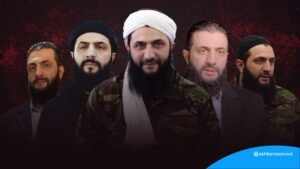
On 30 August 2009, Jordanian journalist Murad Batal al-Shishani published a new article in al-Hayat where he asserts that an Islamist’s clothes are often political statements and can indicate his precise type of Islamist orientation.
Al-Shishani states that during the 1980s, the Salafi style of “short clothing” (a likely reference to the ankle-high pants Salafis commonly wear) became prominent along with “Afghan clothing,” which is the shalwar kameez and which represented solidarity with the Afghan-Arab Mujahidin. Today, he claims that someone with a beard is often described as one of the “brotherhood.”
He writes that two prominent differences in clothing currently exist. The first is the contention between those who follow Abu Muhammad al-Maqdisi and the “neo-Zarqawis,” who consider themselves as the legacy of Abu Mus’ab al-Zarqawi. The second is between Hamas and the jihadi groups in Gaza.
In the al-Maqdisi—neo-Zarqawi split, al-Shishani states that the neo-Zarqawis wear a black skullcap, which some consider a representation of the Salafi-jihadis. Al-Maqdisi himself said the black skullcap, or any color skullcap for that matter, did not accurately represent someone’s religious tilt. Rather, he claimed, to know someone’s religious affiliations one should look into someone’s heart and actions. However, he did acknowledge that “some simple and novice youth” recognize the black skullcap as a Salafi-jihadi symbol.
As for the Hamas—Salafi-jihadi split, Abd al-Latif Musa, AKA Abu al-Nur al-Maqdisi, a former preacher for Jund Ansar Allah stated on 15 February 2009 that the Salafi-jihadi wears dark-colored Pakistani clothes with “a military jacket” that is a bit larger than the person so he can “hide his personal weapon or radio under it. He wears a small black hat that resembles the hat Abu-Mus’ab al-Zarqawi … [wore]. Some of them allow their hair to grow to their shoulders covering it was a piece of cloth called a hatteh or a shaleh.”
Al-Shishani provides a practical guide on the type of clothes one could expect a jihadi to wear. However, he warns that in the case of Salafi-jihadis, they will not likely wear their typical jihadi clothes during an operational mission because doing so could garner unwanted attention.
(In case anyone is interested, the article reminded me of this unrelated piece about the Qubaisiyat, a secretive female Islamic group in Syria.)




10 Responses
Interesting. How come this isn’t what you see in some of the more hardcore salafists in the US that follow these guys mentioned above? Something lost over the Atlantic?
Plenty of these guys wear gangsta clothing too. How that escaped attention is anybody’s guess.
I am sorry to say, but if you like to select on what ‘Madhab’ someone is, it is for sure not the clothes you have to watch….
Taqqiya is wide-spread and practised by many Salafi’s. Taqqiya means; the Concealing or disguising one’s beliefs, convictions, ideas, feelings, opinions, and/or strategies at a time of imminent danger, whether now or later in time, to save oneself from physical and/or mental injury.
In other words, most EU and US Salafi’s who are truly planning, will conceal their intentions and wear western clothing, drink alcohol and so on (see Mohammed Atta before 9-11).
On Jihadi forums this post on Jihadica is a topic of laughter.
About the black skullcaps, the ones who are wearing those are (mostly) westerners who don’t want to be recognised and people who (in daily life) have other functions that could support the Mujahedeen in those countries.
Especially in Iraq this is the case. The ones with skullcaps are the ones who are sitting together with the ‘regular’ police, politicians and so on during day-time.
In 1980s Turkey style of beard and moustache told a lot about an individual’s politics.
Among occult mystical nationalist Zionist the style of skullcap (kippah) generally identifies faction.
OSINT is thoroughly enmeshed in Jewish Zionist Islamophobic incitement. See Collision: Jewish-Zionist, Arab-Islamic Transnational Politics/a>. Note that even arch-Islamophobe Daniel Pipes rejects the mindlessly stupid taqiya discourse.
Obviously it serves the overarching Jewish Zionist goal of marginalizing Western Muslims if a Muslim, who wears a beard and regularly goes to Mosque, is an extremist while a Muslim, who drinks alcohol and is throroughly secular, is also an extremist.
[Previous comment is broken.]
In 1980s Turkey style of beard and moustache told a lot about an individual’s politics.
Among occult mystical nationalist Zionist the style of skullcap (kippah) generally identifies faction.
OSINT is thoroughly enmeshed in Jewish Zionist Islamophobic incitement. See Collision: Jewish-Zionist, Arab-Islamic Transnational Politics. Note that even arch-Islamophobe Daniel Pipes rejects the mindlessly stupid taqiya discourse.
Obviously it serves the overarching Jewish Zionist goal of marginalizing Western Muslims if a Muslim, who wears a beard and regularly goes to Mosque, is an extremist while a Muslim, who drinks alcohol and is throroughly secular, is also an extremist.
“OSINT is thoroughly enmeshed in Jewish Zionist Islamophobic incitement.”
Ah, good to know! It means it still has a shred of rationality!
Wow! I stumbled upon this blog post, and am astonished at the ignorance displayed.
I’m not sure if the author is trying to be intentionally deceitful or was given some very wrong information. As a self described “Salafi” (Orthodox Sunni), and an American, I can tell you that none of these “gang signs” the author describes exist in real life. Maybe they do in some comic book fantasy land, but not in the real American Muslim community. Also, the article equates Salafis with Jihadis. This makes no sense as the Salafis here in the states that take their knowledge largely from scholars in Saudi, Kuwait, Yemen, etc. are some of the fiercest opponents to terrorism and the Kharajite ideology. They are also some of the fiercest opponents to the Takfeeri movement of revolution and upheaval that was promoted by Sayyid Qutb and the Muslim Brotherhood…A movement inspired more by post-colonial resentment and Leninism than by traditional Islam. Instead of being so fearful and buying into the war propaganda (designed to make the people accept an intrusive Orwellian state without resistance), maybe you should actually go to the mosque and see for yourself what goes on. Or perhaps, strike up a conversation with your Muslim neighbor. You might learn something. But, if you keep using the taqiyya (which is forbidden and not part of the Sunni tradition at all) copout, and take all your knowledge from Robert Spencer and other paid hacks, you’ll just continue shooting in the dark.
I suggest looking up answering-extremism.com if you want to see what the major Salafi scholars say about terrorism. Salaam.
-Abdullah
Salam Abdullah,
This article simply a translation of an Arabic newspaper article by Jordanian journalist Murad Batal al-Shishani. The author is not describing the American Muslim community, rather he is discussing groups in Jordan and Palestine.
Also this site has nothing to do with the Robert Spencer’s of the world, or whipping up war propaganda against Muslims; it focuses on examining materials related to the Takfiri Qutbist trend you mentioned.
– Paul